
- All
- Cap Closing Machines
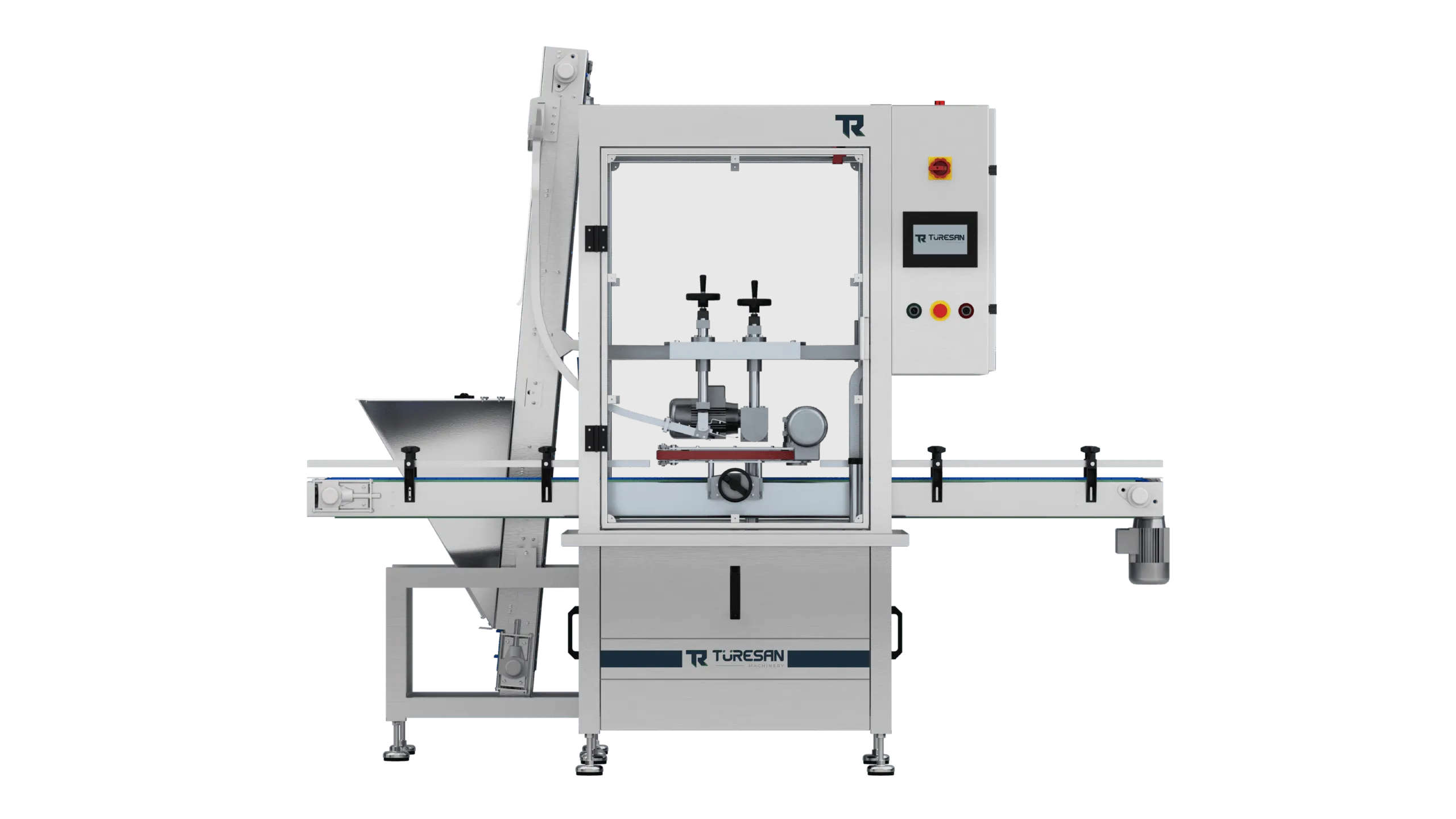
Linear System Capping Machine
An efficient system that increases your production speed with automatic lid closing and securely seals your products.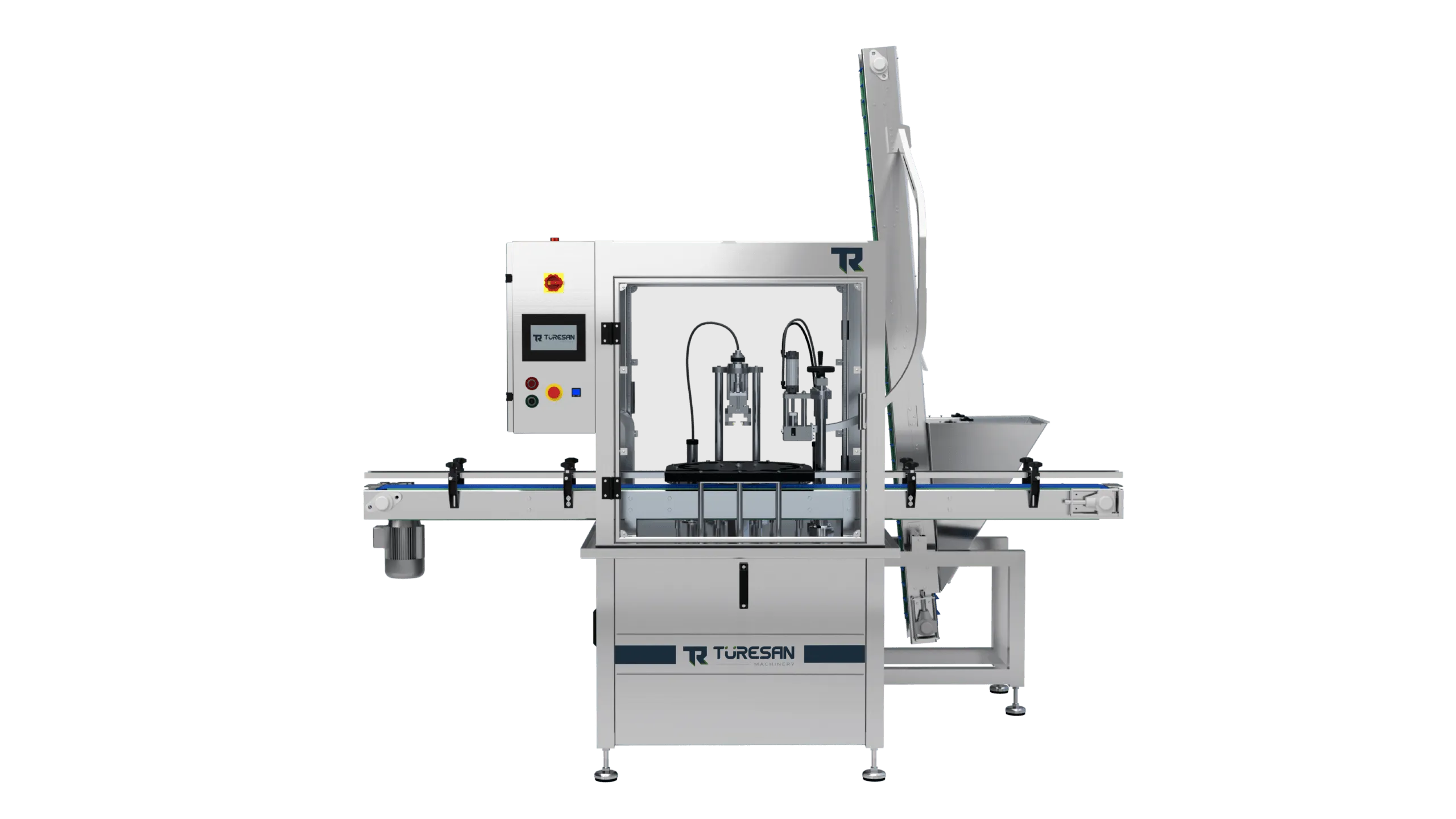
Rotary System Capping Machine
It is a machine that optimizes your production process by performing a fast and secure lid closing operation with a reversible system.Capping machine selection guide
Capping machine choice depends on cap type, required torque and line speed. Wrong torque means leaking products or caps customers cannot open. Türesan builds linear and rotary cappers with several drive and closing systems.
| Drive | Feature | When to choose |
|---|---|---|
| Servo torque | Torque and speed set in software; every cap can be logged | Pharma and cosmetics where torque accuracy is critical |
| Induction motor | Robust, economical electric drive | General screw caps |
| Mechanical torque | Fixed torque via adjustable clutch | Long runs with a single cap type |
| Air motor | Compressed-air drive, spark-free | Solvents and flammable chemicals |
Closing methods: gripper, three-ball, pick&place, straight screwing, crimping (ROPP) and press-on. Caps are fed by elevator, vibratory bowl or drum feeders. Linear cappers give flexibility for frequent changeovers; rotary cappers serve high-speed single-product lines. Both run on 380 V, 50 Hz, 3-phase and 6–8 bar air.
Last updated: 7 October 2026